Occurrence uses the 30 sampled plots in each community. Community boundaries are not rigid; these are study observations, not a complete Estonian distribution. Study data and methods →
INDEPENDENT BOTANICAL EVIDENCE
General ecology
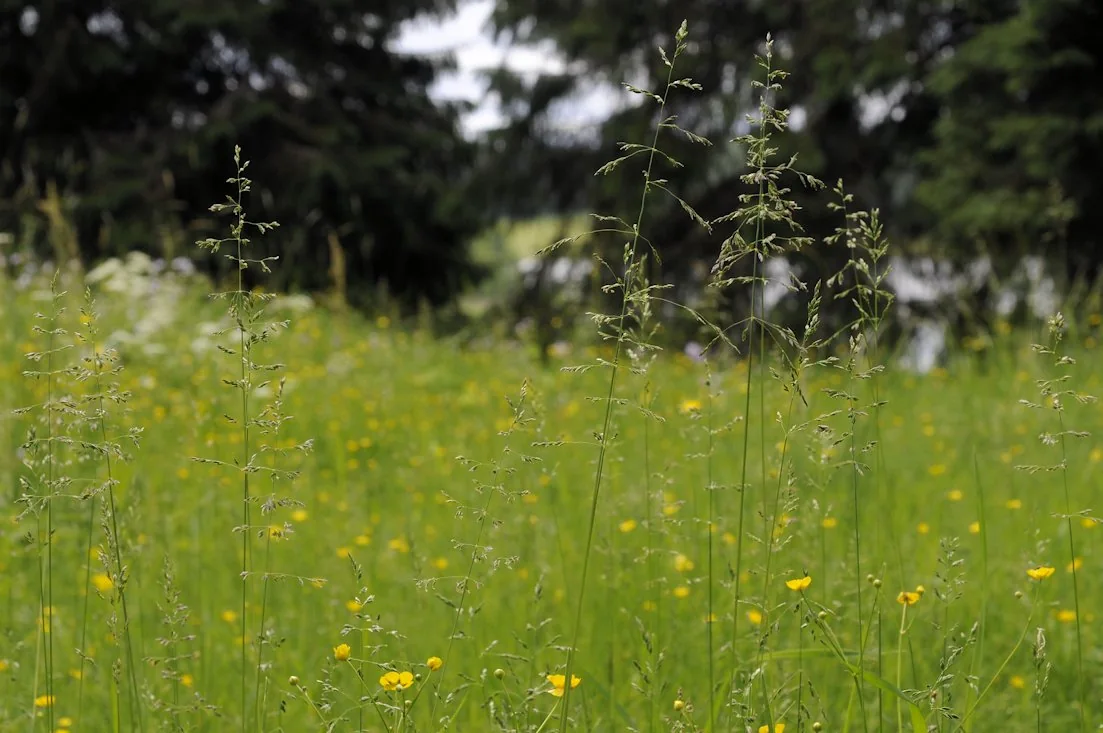
Poa pratensis is a loosely tufted perennial grass of forest edges, meadows, lawns, sown grasslands, yards, gardens, verges and waste ground. It is native across cool and temperate parts of the Northern Hemisphere and established more widely, making it a broad grassland species.
TG · Tall Grass3 / 30 · 10%Cover among 1 plots: median 5% · IQR 5–5%
Saardu2 / 20 plots
Keemu2 / 30 plots
Koera0 / 30 plots
Kudani0 / 40 plots
FINBIF TAXONOMY
Current verified classification
kingdomPlantae Haeckel
phylumTracheophyta Sinnott ex Cavalier-Smith
classMagnoliopsida Brongn.
orderPoales Small
familyPoaceae Barnhart
genusPoa L.
speciesPoa pratensis L.
OUR MEASURED TRAITS
Pool-wise CCI and leaf area
Trait values are pooled measurements collected during the 2024 coastal-meadow field campaign and are study observations, not fixed species constants. Only summaries with at least five measurements are shown.
No validated pool-wise trait summary
This species did not meet the ≥5-measurement rule in the supplied CCI or leaf-area summary tables.
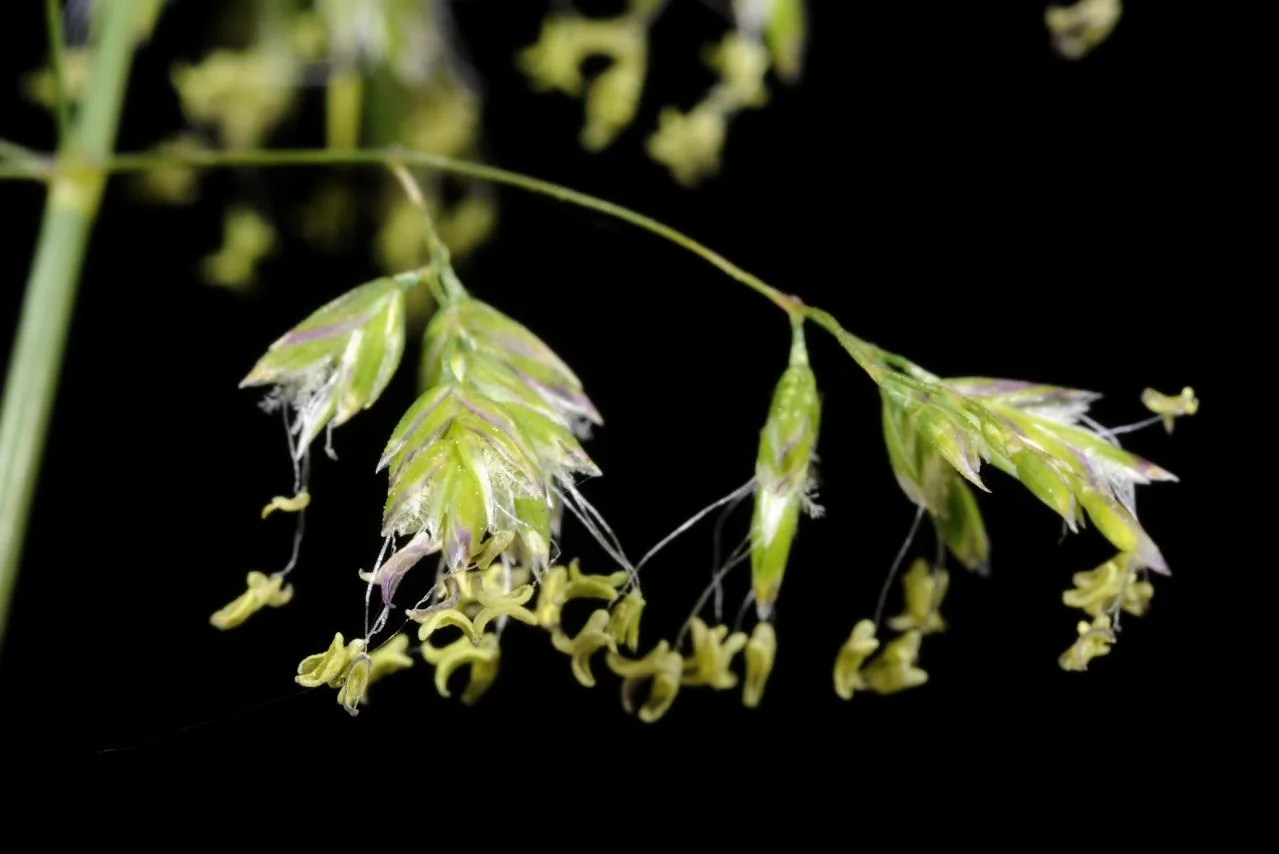
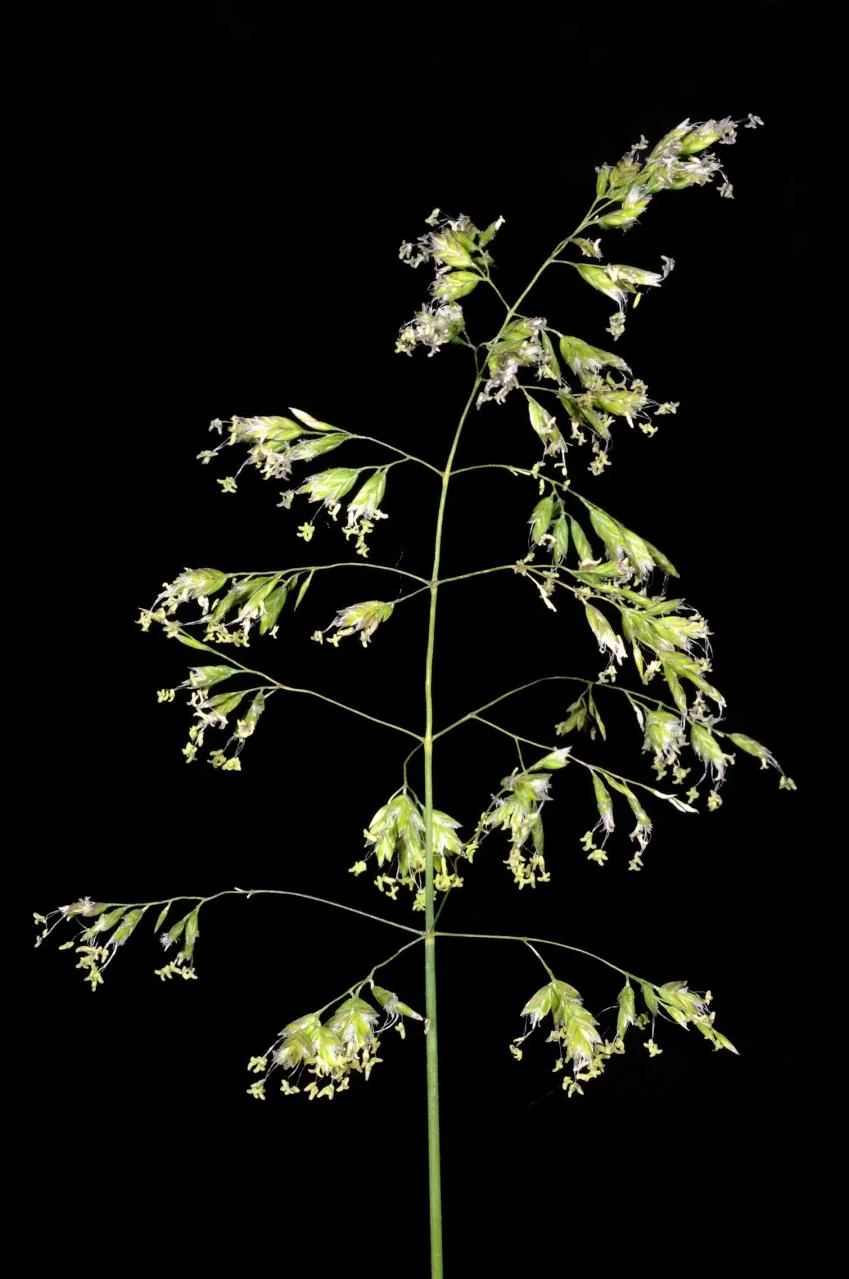
Licensed FinBIF photographs
Additional photographs
These views complement the primary photograph above without repeating it. Use them alongside a regional identification key; photographs alone are not sufficient for a field identification.
These steps show what this record contributes to the 2024 study. They do not turn the taxon name into a remotely sensed measurement.
1 · FIELD EVIDENCE4 of 120 plots
1 occupied plot has a positive numeric cover value available for occupied-plot cover summaries.
2 · TRAIT ELIGIBILITYNo eligible CCI or leaf-area summary
Neither trait met the documented minimum of five measurements for this taxon, so it contributes no species median to the CCI or leaf-area community-weighted means.
3 · MODEL LINKPlot response, not species detection
Plot-level ecological responses are paired with UAV predictors. A fitted model can estimate variation in those responses across the landscape; this record does not train a classifier for Poa pratensis.